
I’m very happy to sit down and compile this list of my favorite titles of 2025 and would love it to become a little ritual that I can hopefully continue for the years to come.
2025 had been a very special year for me where I spent most of it in Tokyo – something I had been wishing for a long while. I also took the opportunity to take my Japanese to the next level (well, at least my reading ability) therefore I attempted reading a couple of Japanese books and got enormous pleasure from it, so I’ll include one title in this list.
In addition, this list also includes quite a few Chinese titles. I finally gave in to Wechat Reading subscription. Despite its notorious reputation on profit sharing with publishers and authors, it unfortunately does make Chinese books a lot more accessible for oversea readers.
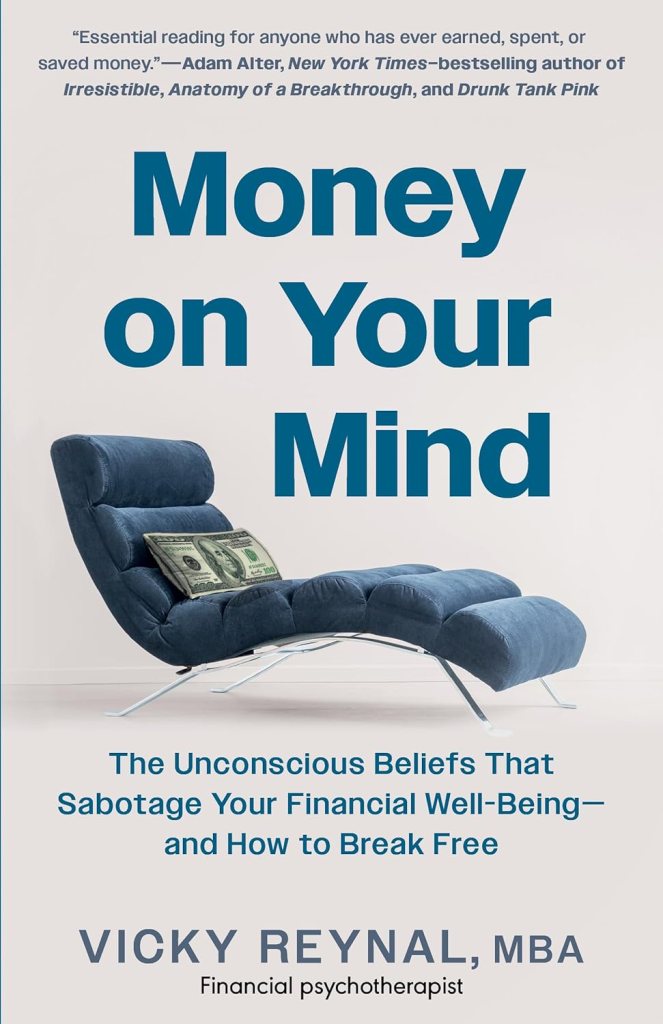
Money On Your Mind – Vicky Reynal
Honestly I had been searching for a book like this for a while! During the search, I read “The Psychology of Money” by Morgan Housel a couple of years ago but realised quickly that it wasn’t what I was looking for. Vicky Reynal’s book, despite its slightly misleading subtitle as it’s not really about how to make more money, is really about what’s behind our complicated and often confusing emotions and behaviours about money. Like almost every subject that is discussed in a therapy room, a lot of it can be linked to our past (traumatic) experiences.

How to Change Your Mind – Michael Pollan
Psychedelics is something that I’ve been curious about, not necessarily from a personal experience point of view, but I’m definitely interested in how it works and hearing about others’ experience. I read Michael Pollan’s “This Is Your Mind on Plants” first and while it was also an enjoyable read, it didn’t satisfy enough of my curiosities. This is a much older purchase and I only picked it up from the shelf few weeks before leaving for Japan, and it turned out to be among my best reading experiences of the year. It also gave me a new perspective to look at the fascinating and overwhelming feeling I had during the first few weeks in Japan.

Fifty Sounds – Polly Barton
Polly Barton is a translator of Japanese to English (Asako Yuzuki’s “Butter” among others) and “Fifty Sounds” is her memoir of her time teaching English in Japan. It wasn’t an easy reading for me, especially the philosophy part (Barton’s thesis was on Ludwig Wittgenstein and she had quite lengthy reflection on the philosopher in the book). But I loved her observations on both Japanese people and her own experience, the precisions and subtlety that are common in Japanese culture but for me rarely seen in outsider’s portrait of Japan.

Tastes Like War – Grace M.Cho
I came across this title from a Mastodon friend’s recommendation. It’s a very touching and beautiful memoir of the author’s quest in understanding her mother’s mental illness from not only a personal perspective but also from a global history and social point of view. It really showed me how a person’s mental health can be formed (or should I say destroyed?) by historical and social environments, how we can be driven “mad” by the world.

重走 – 杨潇 | To the Finest School I Know – Yang Xiao
I picked up this book before heading to Tokyo and it companied the initial exciting, overwhelming and disorientating days after I arrived. Yang Xiao traced the land route that a group of university students and teachers took to retreat to the safer southwest region during Japan’s invasion, and in this book he meticulously researched and described their journey like where they stayed, who they spoke to, what they ate and even how they felt. History descriptions are also interwoven with his personal observations of the current reality. It’s almost amusing that I picked a book that reminds me of the horrific history between China and Japan and perhaps in a sense it added to the disorientation I felt. But at the same time it was also a very satisfactory reading experience, allowing myself to be lost in history and place together with him, while reflecting on my own journey.
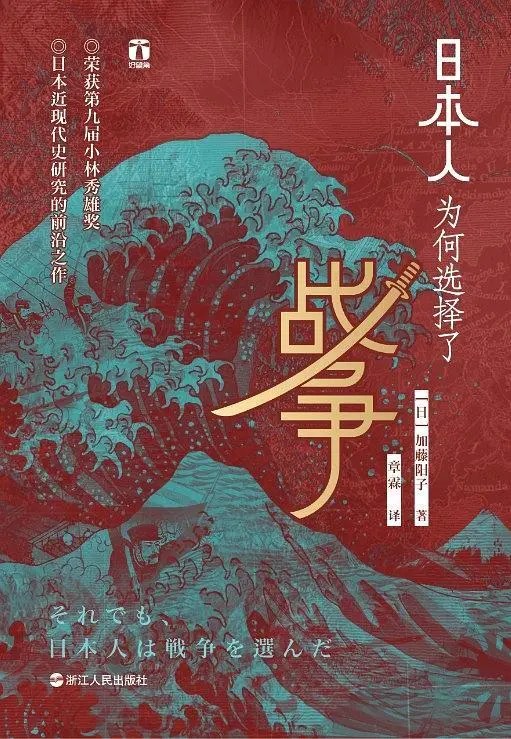
それでも、日本人は「戦争」を選んだ – 加藤 陽子 | 日本人为何选择了战争 – 加藤阳子 | And, Still, Japan Decided to Go to War – Kato Yoko
I was never curious about that war in my home country, probably because the subject was already ubiquitous while I grew up. It was in the textbook, it was on TV and newspaper. We were reminded of the history constantly and there seemed to be nothing that I needed to be curious about. But then one day I realised I never understand why Japan (or Japanese government or Japanese people, however you want to look at it) did it. Of course they were not monsters, they were as greedy and cruel like the rest of us, but they were also (at least some of them were) stupid, cowardly, brave or kind like the rest of us. This book came from a series of history lectures that Kato Yoko gave to high school students so it’s very accessible. Though I can’t say I fully accept all her views but it’s been very eye-opening for me to learn about what was happening at that time in Japan, different forces at play then and probably some still active now. It felt especially relevant when 2025 marked the 80th anniversary of the end of WWII.
我在废土世界扫垃圾 – 有花在野 | I Clean Up Garbage in a Wasteland World – You Hua Zai Ye
China has a very active online literature space. To many young readers, it can even be said that the online reading experience has already overtaken (or even replaced) the traditional book and paper. “I Clean Up Garbage in a Wasteland World” has been considered by some a masterpiece, and I’ve heard compliments about it from time to time. But what caught my attention and made me finally decide to read it is a comment that the author must have had a very complicated relationship with her mum to have written such a novel. It certainly wasn’t a casual read with close to 2 million words (almost the size of 10 regular books). The author has such a talent of creating bone-chilling effect that reading it late in the night I sometimes felt I might have been dragged into one of the contaminated zones and my sanity point was also dropping, and it really freaked me out. Yes there’s certainly a line of mother-daughter relationship in the story, but there’s also much more. She’s shown us a crazy creepy scary world that’s full of monsters but soon you’ll realise it’s actually the world we live in now.
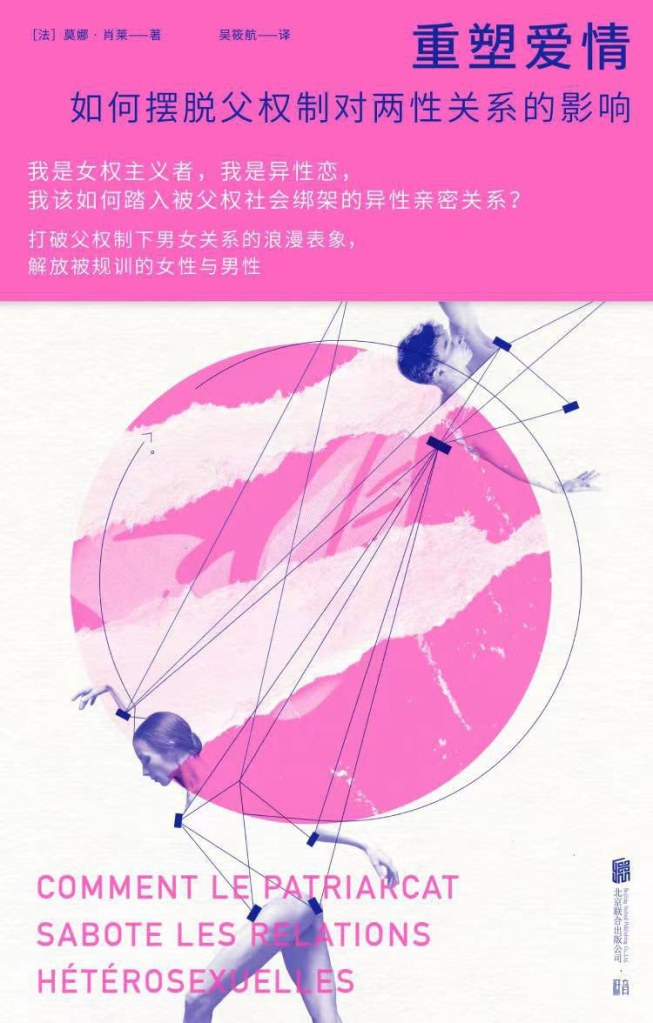
Réinventer l’amour: Comment le patriarcat sabote les relations hétérosexuelles – Mona Chollet |重塑爱情:如何摆脱父权制对两性关系的影响 – 莫娜·肖莱
I enjoy reading and learning about feminism. It has given me a “new” perspective to see the world around me, as well as to reflect on my own experience in it. However, as much as I feel empowered by the process, I also sometimes feel a bit confused. As a middle-aged heterosexual cis gendered female who’s in an overall happy marriage, I occasionally find it hard to see my own relationship through the new lens. While I completely agree that both of us have been shaped by the patriarchal society we grew up and live in, I also don’t want to ignore our individuality. Mona Chollet was recommended to me by a friend. She writes with a clarity (and wittiness!) that I wish I had. Though I can’t say all my confusion is gone after reading her book, I do feel a great sense of relief that other smarter people are out there thinking and writing about the things that also bother me.
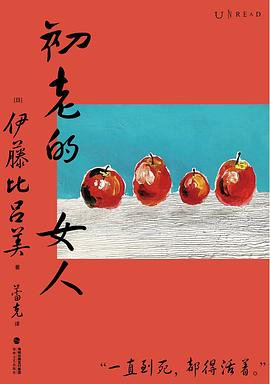
ショローの女 – 伊藤比呂美 | 初老的女人 – 伊藤比吕美 | A Woman Approaching Old Age – Hiromi Itō
In Japan Hiromi is known for her poems while the Chinese readers are more familiar with her essays. In “A Woman Approaching Old Age” (and two other essay collections), she talks about the mundane in her life in an honest way, her dog, teaching and her students, pilate classes, caring for her dad and then her husband, her children…. There’s (almost) nothing fancy about the life of a woman at that age. In fact, we don’t hear much from this group in their own words, which is probably why I love her essays so much.

1980年、女たちは「自分」を語りはじめた – 河野貴代美 | In 1980, Women Began to Speak Out About Themselves – Kiyomi Kawano
I’ve written about this book in another post (in Chinese). Before I came to live (temporarily) in Tokyo, the only Japanese therapist I was aware of was Hayao Kawai (河合隼雄), the only Japanese feminist I was aware of was Chizuko Ueno (上野千鶴子), and I didn’t know feminist therapy is a thing in Japan. Kawano is considered to be the first one to introduce feminist therapy into Japan in the 80s, based on what she learnt and experienced in the US. This book revisited the past 40+ years of the beginning and development of feminist therapy (called feminist counselling in Japan) in Japan, but also went further back to include a little about her own personal history both before going to the US and living and working in the US. It’s inspiring and encouraging to see their journey, especially in a country like Japan where gender equality sits consistently in the bottom of world ranking (well, China is only slightly better).
 Qian Yang
Leave a comment